
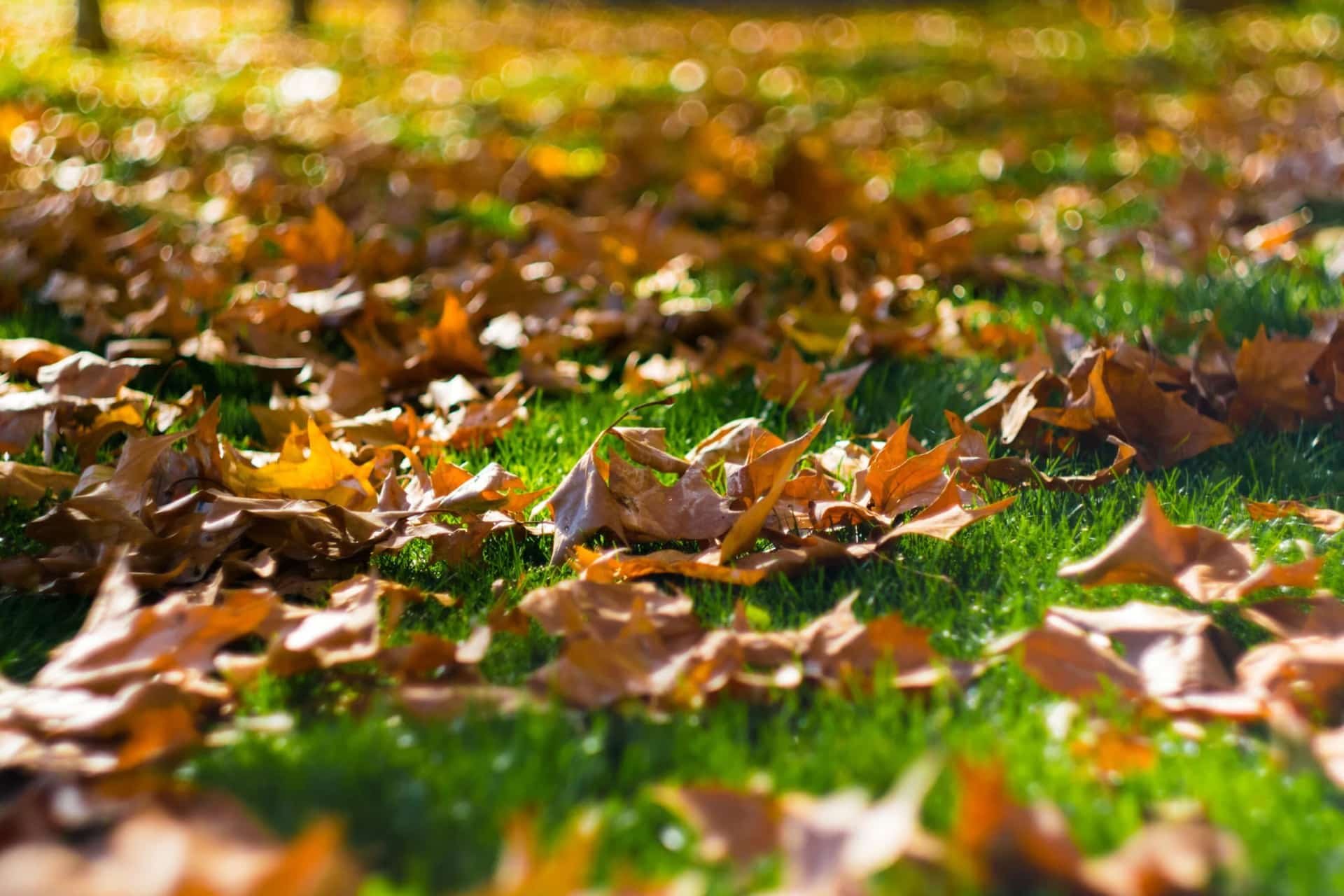
Rake or don't rake? For most of fall, it barely matters; a few leaves scattered across the grass won't do any harm, and mowing right over them actually feeds the lawn a little. What changes everything is thickness. Once leaves build into a solid, undisturbed layer, they cut off the light, air, and moisture the grass underneath needs, and here on the coast, where fall air stays humid longer, that trapped moisture brings disease risk right along with it. So the real question isn't whether you have leaves; it's how deep they've gotten.
How Much Light Do Fallen Leaves Block?
According to NC State Extension, as leaves fall and accumulate, they become layered and create a mat that blocks light, air, and water movement to the grass below. Turfgrass needs a meaningful amount of direct light to keep producing the energy it's storing up for winter, and NC State Extension notes that any area getting less than 50 percent open sunlight or less than four hours of direct sunlight a day is already too shady for turf to grow well. A heavy leaf mat can push a perfectly sunny lawn into that same shaded, struggling category for as long as the leaves stay put.
That's a bigger deal in fall specifically, since this is exactly when warm-season grass is trying to store the energy reserves it needs to survive winter dormancy and green back up strong in spring. Grass that's been smothered under leaves during that window enters winter with less in the tank than it should have.
Why Coastal Humidity Makes This Worse
A thick leaf layer does more than block light. It traps moisture against the grass blades and soil surface, and coastal North Carolina's humid fall air already keeps everything damper longer than it would stay in a drier climate. That combination of trapped moisture and reduced airflow creates exactly the conditions that favor large patch, the fungal disease that shows up on warm-season lawns here in fall and spring, a topic we've covered in more depth in our piece on brown patch and large patch disease.
Leaves sitting wet on top of the grass for days at a time just adds another layer of moisture on top of an already favorable setup for the fungus. A leaf mat near a fence line, a shaded corner, or anywhere airflow is already limited tends to stay damp the longest, which is usually where a large patch outbreak shows up first once conditions line up.
Is There a Point Where a Few Leaves Are Fine?
Yes, and this is where a lot of homeowners overcorrect. If you can still see grass blades poking through the leaves, that coverage is usually light enough to mulch in with a mower rather than rake up entirely. Chopped fine enough, those leaf pieces settle down into the turf and break down over time, adding organic matter back into the soil rather than sitting on top of it as a barrier. The rule of thumb is coverage, not quantity: a scattering you can see through is manageable; a solid mat you can't is not.
What Does Smothered Grass Look Like?
Grass under a leaf mat for more than a week or two usually starts showing it before the leaves are even cleared away. Blades yellow first, since they're not getting enough light to keep producing chlorophyll, and the grass underneath thins out as growth slows or stops entirely in that spot.
Once the leaves finally come off, you're often left looking at a patch that's noticeably weaker or more yellow than the surrounding lawn, sometimes with bare spots if the smothering went on long enough. Recovery isn't usually instant either, since a weakened patch of turf needs a few weeks of unobstructed light and normal growing conditions to bounce back to match the grass around it.
Mulching vs. Removing: Which Is Right for Your Yard?
Light, scattered leaf cover mulches in well with a standard mower and a few passes, especially if you're keeping up with it weekly rather than letting leaves pile up over several weeks. Thick mats, wet clumped leaves, or coverage so heavy the mower can't chop it fine enough all call for raking, blowing, or bagging instead. Large, leathery leaves like magnolia and oak tend to mat down worse than smaller leaves and often need full removal even in moderate amounts, since they don't break apart as easily under a mower blade.
What About Leaves Blowing In From Neighboring Trees?
Wooded coastal lots often deal with an ongoing trickle of leaves rather than one big drop, which makes it easy to lose track of how much has accumulated. A yard that looks lightly covered on a Monday can be solidly matted by the following weekend if nobody's checked on it. Staying ahead of it with a weekly pass through peak leaf season, rather than waiting for one big fall cleanup, keeps the lawn from ever crossing into smothered territory in the first place.
Let Us Keep Your Lawn Clear This Fall
At Sanderson Lawn Management, we build leaf management right into our regular seasonal service across Surf City, Hampstead, and Topsail Beach, so your lawn never sits under a smothering layer long enough to suffer for it. Reach out today, or call us for a free assessment and quote.
Frequently Asked Questions
-
It varies with thickness and weather, but a thick, wet mat can start affecting grass in as little as one to two weeks, especially during a stretch of humid or rainy fall weather.
-
Yes. Finely chopped leaves break down over time and return organic matter and some nutrients to the soil, similar to how grass clippings do when left to decompose.
-
Yes. Large, leathery leaves like magnolia and oak tend to mat down more than smaller, thinner leaves like maple or birch, which chop up and break down more easily under a mower.
-
Yes. Even though dormant grass isn't actively growing, a heavy leaf mat can still trap moisture against the crown of the plant and contribute to disease pressure going into winter.
-
Aggressive raking on a wet or thin lawn can pull up grass along with the leaves, so a lighter touch or a leaf blower is often gentler on turf that's already stressed.